

Mold Supplier Evaluation: 8 Checks Before You Place the Order

The Cost of the Wrong Mold Maker Far Exceeds the Price Difference
A mold is one of the few purchases in manufacturing that cannot be redone. Unlike standard components, it cannot be returned or exchanged; unlike raw material, it cannot simply be replaced with another batch. A mold is custom-built for a single product, paid for once, and everything downstream — line capacity, delivery, launch date — is tied to it.
The real risk in mold procurement therefore has little to do with the price difference on the quotation. The gap between quotes might be a few thousand dollars; the cost of late delivery, rework, and a missed launch window from choosing the wrong supplier is typically several times the tooling cost itself.
The eight checkpoints below are what the industry uses to judge a supplier's stability.
1. Is design capability in mold supplier house?
Mold design determines roughly eighty percent of the downstream cost and risk. When design is outsourced, every engineering change has to travel through an extra layer, and the boundary of responsibility blurs — the designer isn't accountable for machinability, and the machinist can only build what the drawing says.
The real question isn't whether they have design capability, but whether design and machining share the same data. Howmin completes all design in-house using UG NX; design and machining work from the same 3D file, with no translation error and no gap in accountability between departments.
2. Is the steel verifiable?
Steel grade directly determines mold life and dimensional stability. P20, NAK80, and SKD61 each correspond to a different volume range and surface requirement, and the consequence of the wrong choice doesn't appear immediately — it surfaces tens of thousands of shots into production, as precision decay.
Verifiability is the point. Howmin provides steel certificates and explains the basis for the steel selection at the quotation stage, so the buyer understands what they are paying for before they pay.
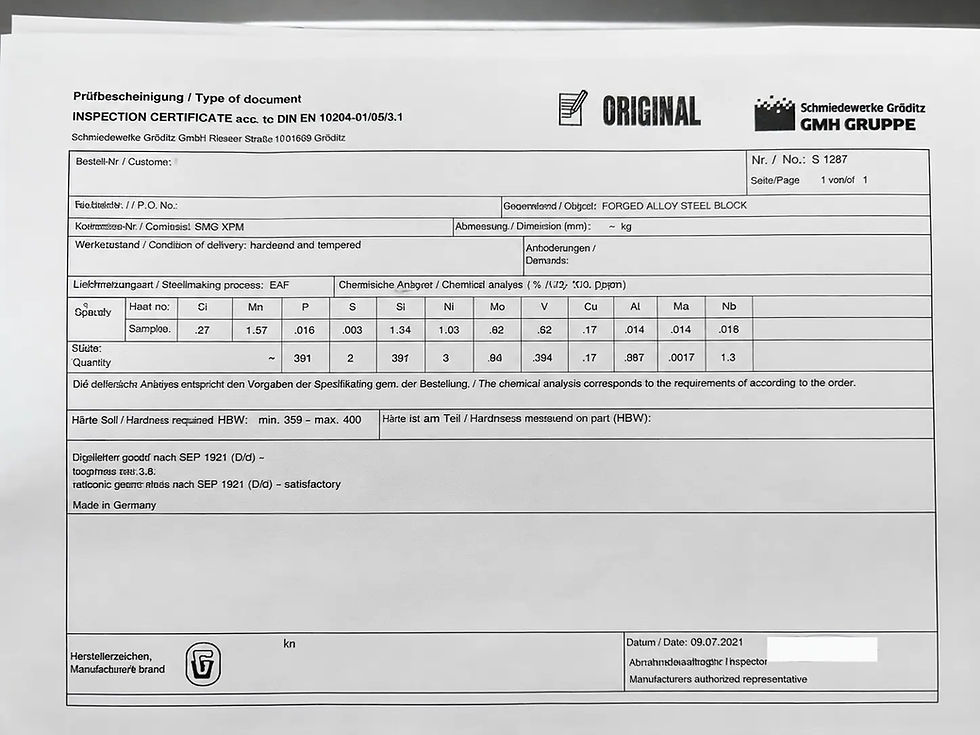
3. Is project accountability clear?
One engineer with clear ownership is worth more than an entire customer-service team. This is especially true in tooling: when a trial goes wrong, the buyer needs someone who can judge the technical cause immediately — not a switchboard.
Scale is an advantage here. Howmin is an 18-person team, and every project is owned end-to-end by one engineer — the person you talk to is the person building your mold.
4. Is the track record specific and relevant?
"We can make anything" usually means nothing is done particularly well. A useful track record isn't a capability list; it's concrete examples of the same class of product.
Since 1994, Howmin has focused on one field: precision injection molds for automotive lighting, with over 2,990 molds delivered. Multi-shot (2K/3K/4K) tooling is our core, and we are one of the few mold makers in Taiwan capable of stable four-shot (4K) automotive lamp molds. Large-format, optical-grade, complex-surface plastic parts are the technical problem we have worked on for three decades.

5. Is the trial protocol clearly defined?
Trials are where most disputes in mold development originate — and the cause is rarely technical. It's definition. When the number of trials isn't fixed, the fifth revision becomes an argument. When report content isn't standardized, the buyer receives samples with no basis to judge them.
A clear protocol covers three things: number of trials, deliverables, and acceptance criteria. Howmin's quotation includes T0 and T1 trials; each trial delivers molded samples, key dimensional measurement data, and molding condition records. Acceptance is complete when samples pass the buyer's verification, or when no objection is raised within the agreed period. If a design change requires additional trials, scope and cost are confirmed before execution — never added afterward.
6. Is data ownership stated in writing?
Ownership of the 3D mold data must be confirmed in writing before the deposit is paid. It determines whether you can change suppliers later, whether you can produce elsewhere, and where you stand if the supplier ceases to operate.
Howmin states mold ownership and design data rights in writing at the quotation stage, leaving no ambiguity — which protects both sides.
7. How are delays handled?
This is the question that reveals the most.
Multi-shot molds involve optical surfaces, differing shrinkage across resins, and complex mechanisms. At that level of complexity, a problem isn't a matter of if but when. A supplier who claims they never run late is either lying or has never managed a delay. And the real risk isn't the delay itself — it's the information gap: the delay happens, and the buyer finds out on the delivery date.
Howmin's principle: every process step is tracked against schedule with a defined alert threshold. The moment a delivery date is at risk, we notify — with a revised estimate and the recovery plan attached. Recovery depends on the cause. If it originates from mold correction, that mold's machining priority moves to the front and unaffected steps run in parallel. If it originates from capacity, non-core operations can be outsourced — but die spotting and optical polishing stay in-house; we don't trade quality for time. If it originates from the customer's design change or verification, the revised date is confirmed in writing at that moment.
We don't promise we'll never be late. We promise you'll be the first to know.

8. A factory visit isn't about the machines
Any serious supplier welcomes a site visit. Reluctance is itself a signal.
But the value of a visit is routinely misused. Machines can be bought and capacity can be added — neither guarantees the next order ships on time. What deserves attention is process discipline: the order of the workstations, at which step measurement occurs, whether standard work instructions exist, how quickly a new hire reaches stable output.
Because suppliers rarely fail on the day of the visit. They fail six months later — when volume doubles, when a new revision arrives, when daily pressure replaces the presentation prepared for the tour. What a buyer invests in is not today's capability, but the ability to keep delivering tomorrow.
New project evaluation: Send your 3D files (STEP/IGES) and the part's application. Howmin provides a free Design-for-Manufacturability (DFM) review and quotation, flagging manufacturing risks at the design stage.


