

How to Choose a Welding Helmet: Safety Guide from Flip-Up to Auto-Darkening Respirator Helmets
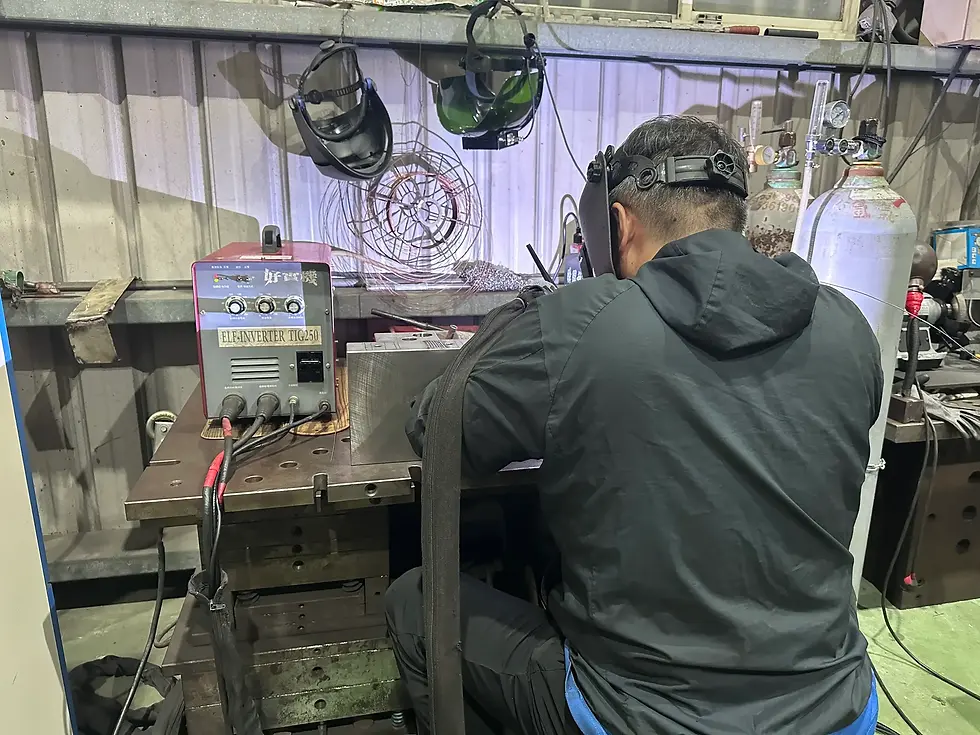
Introduction: Choosing the Right Welding Helmet Means Choosing Safety and Professionalism
In mold manufacturing and repair, welding is an essential and unavoidable process.
Whether it's repairing cavity edges, filling material defects, or reinforcing structures, welding is involved throughout the entire mold machining workflow. During welding operations, the intense brightness of the arc and exposure to metallic fumes (welding fume) pose significant health risks. Without proper protection, long-term exposure may lead to arc eye (welder's flash), skin burns, respiratory illnesses, or even chronic lung damage.
That’s why selecting a suitable welding helmet is not just about improving work efficiency — it’s a critical decision for protecting your vision and long-term health.
1. Main Welding Hazards: Metal Fumes and Intense Light Exposure
Welding generates extreme temperatures—often reaching several thousand degrees Celsius. As metals melt, they release dense smoke and fine particles known as metal fumes. These fumes typically contain iron, manganese, nickel, chromium, and other metal oxide particulates, many of which are smaller than 1 micron. Once inhaled, they can penetrate deep into the lungs and lead to serious health issues.
☢ Short-Term Effects:
Throat irritation or burning sensation
Coughing and dizziness
Shortness of breath
☠ Long-Term Health Risks:
Chronic bronchitis
Metal fume fever
Manganese poisoning (manganism)
Decline in overall lung function
In addition, welding arcs emit high-intensity light, including ultraviolet (UV) and infrared (IR) radiation. Without proper eye protection, this can cause:
Arc eye (photokeratitis) — a painful eye condition similar to sunburn on the cornea
Long-term vision deterioration
👉 That’s why choosing a welding helmet with the right protection level is essential to minimize these risks and protect both your respiratory system and eyesight.
2. Comparison of Four Common Welding Helmets in Taiwan
The following are four popular types of welding helmets commonly seen in the Taiwanese market. They cover a wide range—from entry-level models to advanced protective gear—suitable for different welding needs and user preferences:
1.

3M™ Speedglas™ Auto-Darkening Welding Helmet 9002NC
Best For:
Professional welders
Mold repair
Structural steel welding
Advantages:Renowned for its high optical quality and consistent performance, the Speedglas 9002NC is one of the most popular auto-darkening welding helmets in Taiwan’s welding and mold maintenance industries.
2.

Welding Helmet with Built-In Lighting (Designed for Cold Welding)
Key Features:
Integrated LED lighting system controlled by a handle-mounted button
Auto light-off during welding; light turns back on automatically after welding stops
Design Logic:
Connected via signal cable to the cold welding circuit
Prevents sensor malfunction caused by rapid low-energy discharges typical in cold welding
Advantages:
Standard auto-darkening welding helmets often fail to detect cold weld arcs properly
This helmet ensures consistent functionality and operator safety during cold welding operations
Best For:
Mold cold welding repair
Precision or fine-detail welding work
3.

Standard Flip-Up Welding Helmet (Manual Type)
Key Features:
Requires manual lifting of the dark lens to inspect the workpiece
Does not include auto-darkening functionality
Advantages:
Simple structure and highly durable
Budget-friendly option for basic welding protection
Disadvantages:
Less user-friendly for beginners
If the lens is not lifted in time, it may obstruct vision and cause welding errors
Best For:
Entry-level welders and trainees
Occasional welding tasks
Technical training programs in schools or vocational centers
Summary:
A classic choice for welding beginners
Recommended to upgrade to an auto-darkening welding helmet over time for better efficiency and safety
4.

PAPR Auto-Darkening Welding Helmet (Powered Air-Purifying Respirator)
Key Features:
Integrates an auto-darkening filter (ADF) lens with a PAPR (Powered Air-Purifying Respirator) system
Designed for maximum eye and respiratory protection during welding
Functionality:
Effectively filters welding fumes, metal particles, dust, and ozone gases
Maintains a continuous flow of purified air to the welder’s breathing zone
Advantages:
Provides dual protection—for both eyes and lungs
Reduces long-term respiratory risks from inhaling hazardous welding fumes
Enhances comfort and safety for long-duration welding tasks
Recommended For:
Confined spaces, prolonged welding sessions, and high-contamination environments
Professionals working in industries such as aerospace, shipbuilding, or automotive repair
Summary:
One of the most advanced and comprehensive welding PPE systems currently available in the Taiwanese industrial market
Ideal for welders requiring the highest level of health and safety compliance
3. Key Factors When Choosing a Welding Helmet
1. Shade Level (Shade Number)Adjust the lens darkness level based on welding current and process type. A shade range of #9 to #13 is generally recommended for most arc welding applications.
2. Reaction Speed and SensitivityThe faster the auto-darkening speed, the less stress on the eyes. Choose a helmet with a darkening response time of ≤ 1/20,000 seconds for optimal protection against arc flash.
3. Comfort and Weight DistributionHeadgear fit and helmet weight greatly impact user comfort during extended use. In Taiwan, most professional welders prefer helmets weighing under 600 grams to minimize neck fatigue.
4. Respiratory Protection (PAPR System)For long-term welding in enclosed workshops or when working with aluminum and stainless steel, a helmet equipped with a PAPR (Powered Air-Purifying Respirator) system is highly recommended. It effectively filters out welding fumes, metal particulates, and ozone gas, protecting the lungs.
4. Conclusion: From Basic Eye Protection to Comprehensive Occupational Safety
A welding helmet is not just an eye protection device — it is the first line of defense for professional welders’ long-term health. From traditional flip-up helmets, to auto-darkening models, and finally to respiratory-integrated helmets, each upgrade is an investment in worker safety and well-being.
📌 Howmin Co., Ltd. recommends the following:
For beginners, a basic flip-up helmet is a good entry-level choice.
For precise welding tasks, upgrading to an auto-darkening helmet greatly enhances visibility and efficiency.
For long-duration welding or when exposed to significant welding fumes, we strongly recommend choosing a helmet equipped with a PAPR (Powered Air-Purifying Respirator) system for full respiratory protection.
➡️ Prioritize safety. Choosing the right welding helmet is the best way to protect your vision and respiratory health in the long run.


